
Thanksgiving Foods Dogs Can and Can’t Eat: A Holiday Safety Guide
Thanksgiving foods dogs can and can’t eat aren’t always obvious, especially when the holiday table is filled with tempting dishes. And if you have a dog at home, you probably know how difficult it can be to resist those hopeful eyes watching from beneath the dinner table!
While it’s tempting to share a little of the holiday feast with your four-legged family member, not every Thanksgiving favorite is safe for dogs. Some foods can cause an upset stomach, while others contain ingredients that can be toxic or lead to serious health problems.
So, what Thanksgiving foods can dogs eat, and which ones should stay off their menu? Let’s take a closer look at what’s safe, what’s best avoided, and how to keep your dog happy and healthy throughout the holiday.
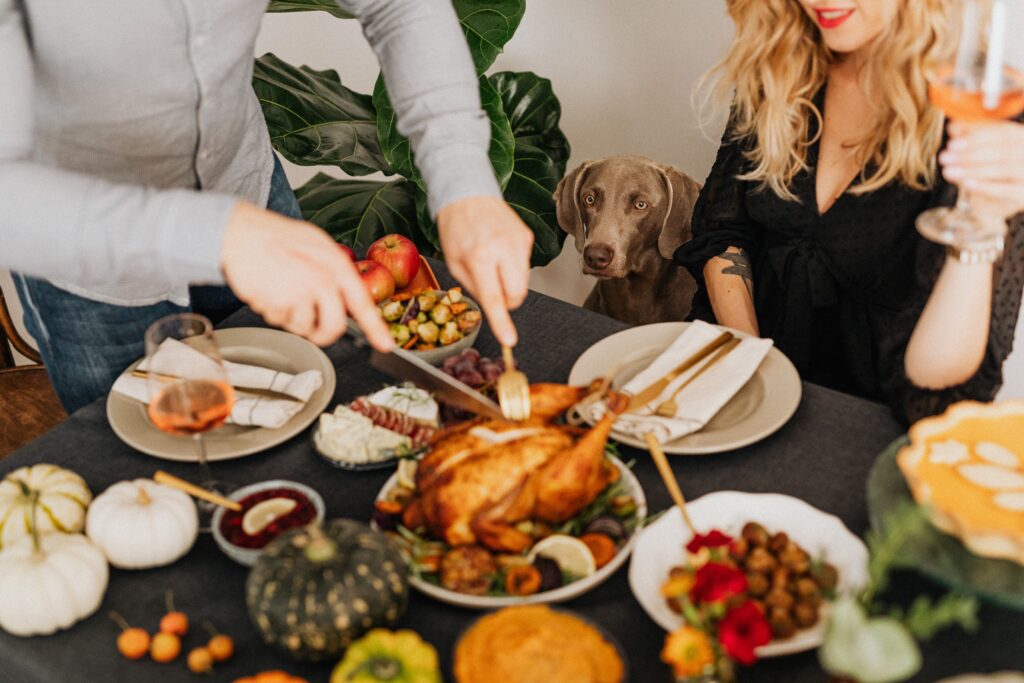
1. Can Dogs Eat Thanksgiving Turkey?
The good news is that plain, fully cooked turkey can be a safe treat for many dogs when served properly and in small amounts.
If you’d like to share a little turkey with your dog, keep these guidelines in mind:
- Remove all bones. Cooked poultry bones can splinter and cause choking, injuries to the digestive tract, or intestinal blockages.
- Remove the skin and excess fat. Turkey skin and fatty scraps can be difficult to digest and may contribute to pancreatitis.
- Skip the seasoning. Garlic, onion, and other ingredients commonly used to prepare holiday turkey can be harmful to dogs.
- Choose plain, fully cooked meat. Avoid raw or undercooked poultry because it may contain harmful bacteria.
- Offer only a small portion. Even safe foods can upset your dog’s stomach when introduced in large amounts.
A small piece of plain, boneless, skinless turkey is a much better choice than sharing a serving straight from the holiday platter.
Important: Never give your dog the turkey carcass or let them investigate it after dinner. Keep the bones, cooking string, and leftover scraps securely out of reach.
2. Thanksgiving Foods Dogs Should Avoid
Many traditional holiday dishes contain ingredients that are unhealthy or potentially dangerous for dogs. Even when a dish looks harmless, the ingredients used to prepare it can make all the difference.
Here are some common Thanksgiving foods to keep away from your dog.
Stuffing
Stuffing is best left off your dog’s plate. Many recipes contain onions, garlic, butter, seasonings, and sometimes raisins. Onions and garlic can damage a dog’s red blood cells, while raisins can cause serious kidney problems.
Gravy
Gravy often contains large amounts of fat, salt, butter, and seasonings. Rich, fatty foods can cause digestive upset and may trigger pancreatitis, a painful inflammation of the pancreas.
Mashed Potatoes
Plain, fully cooked potatoes aren’t generally the problem. It’s what we add to them! Traditional mashed potatoes often contain butter, milk, cream, garlic, onions, or other seasonings. It’s safest to keep the holiday version away from your dog.
Green Bean Casserole
Plain green beans can be a dog-friendly treat, but green bean casserole is a different story. It often contains cream-based sauces, salt, butter, and fried onions. If you’d like to share green beans, set aside a small portion before adding any toppings or seasonings.
Macaroni and Cheese
Although a tiny amount may not cause a problem for every dog, macaroni and cheese is generally too rich to make a good dog treat. Dairy, butter, cheese, and seasonings can cause digestive upset, especially in dogs that don’t tolerate dairy well.
Desserts and Sweets
Keep Thanksgiving desserts out of your dog’s reach. Chocolate can be toxic to dogs, and desserts containing raisins or grapes are also dangerous.
Be especially careful with sugar-free desserts, candy, and baked goods. Some contain xylitol, a sweetener that can cause a dangerous drop in blood sugar and potentially severe complications in dogs.
3. Thanksgiving Foods Dogs Can Enjoy in Small Amounts
If you’d like your dog to be part of the holiday celebration, there are a few simple foods you may be able to offer.
Always serve these foods plain, fully prepared, and in small portions:
- Plain turkey: Fully cooked, boneless, skinless, and unseasoned.
- Green beans: Plain and cooked or raw, without butter, salt, or seasoning.
- Carrots: Plain, washed, and cut into appropriately sized pieces.
- Sweet potatoes: Fully cooked and plain, without butter, brown sugar, marshmallows, or added spices.
- Pumpkin: Plain, cooked pumpkin or 100% pure canned pumpkin. Avoid pumpkin pie filling, which can contain added sugar and spices.
- Apples: Small pieces with the core and seeds removed.
Remember that these are occasional treats, not replacements for your dog’s regular food. Keep portions modest, particularly if your dog has a sensitive stomach, food allergies, or an existing health condition.
When in doubt, stick with your dog’s normal diet and ask your veterinarian before introducing new foods.
4. Watch Out for These Hidden Thanksgiving Dangers
Food isn’t the only holiday hazard dogs can encounter. Some of the biggest risks come from things that are easily overlooked during meal preparation and cleanup.
A few items deserve extra attention:
- Onions and garlic: These ingredients can be toxic to dogs and may damage their red blood cells. They can appear in stuffing, gravy, casseroles, and seasonings.
- Grapes and raisins: Even small amounts can cause serious kidney problems in dogs. Raisins may be hidden in stuffing, breads, and desserts.
- Chocolate: Chocolate contains substances that are toxic to dogs. The level of risk depends on the type and amount eaten, as well as the dog’s size.
- Xylitol: This sweetener may be found in some sugar-free candies, baked goods, and other products. It can cause a rapid drop in blood sugar and other serious effects.
- Alcohol: Wine, cocktails, beer, and alcohol-containing foods should never be offered to dogs.
- Macadamia nuts: These nuts can cause illness in dogs and should be kept out of reach.
- Cooked bones and corn cobs: These can cause choking, intestinal injuries, or dangerous blockages.
- Turkey string and skewers: Cooking twine, skewers, and other food-preparation items can cause serious problems if swallowed.
A good rule of thumb is to keep your dog away from food preparation areas and never assume a dish is safe just because its main ingredient is dog-friendly.
5. How to Keep Your Dog Safe During Thanksgiving Dinner
Thanksgiving can be an exciting, busy day. Between guests arriving, food being prepared, and everyone gathering around the table, it’s easy for dogs to get into things they normally wouldn’t.
A little planning can make a big difference.
Keep food out of reach. Don’t leave serving dishes, desserts, or leftovers unattended on countertops or low tables. Some dogs are surprisingly good at helping themselves!
Secure the garbage. Turkey bones, cooking string, foil, food scraps, and other leftovers can be tempting. Use a trash can with a secure lid, or place it somewhere your dog cannot access.
Ask guests not to feed your dog. Well-meaning family members may want to share a bite, but they may not know which ingredients are unsafe. Let everyone know ahead of time that your dog should not receive table scraps.
Give your dog a quiet place to relax. If your home is filled with visitors, noise, and activity, your dog may appreciate having a comfortable space away from the excitement.
Be mindful of open doors. With guests coming and going, dogs can sometimes slip outside unnoticed. Make sure your dog has proper identification and keep an eye on doors throughout the gathering.
Keep your dog’s routine as normal as possible. Regular meals, fresh water, walks, and familiar activities can help your dog feel comfortable even when the household schedule changes.
6. What Should You Do If Your Dog Eats Something They Shouldn’t?
Accidents happen, even when you’re careful. A dog might sneak a piece of stuffing, get into the trash, or grab something from an unattended plate.
If you suspect your dog has eaten something potentially toxic or dangerous, contact your veterinarian or a pet poison control service promptly. Don’t wait for symptoms to appear.
If possible, try to determine:
- What your dog ate.
- Approximately how much they ate.
- When they ate it.
- Your dog’s approximate weight.
Save the packaging or ingredient list if the food came from a package. This information can help veterinary professionals determine the appropriate next steps.
Watch for concerning signs such as repeated vomiting, diarrhea, abdominal pain, unusual tiredness, weakness, tremors, or changes in behavior. These symptoms can have several causes, and some food-related problems may not appear immediately.
If your dog is choking, having difficulty breathing, collapsing, or experiencing seizures, seek emergency veterinary care immediately.
Do not try to make your dog vomit or give home remedies unless a veterinarian or veterinary poison specialist specifically instructs you to do so. Some substances and objects can cause additional injury if brought back up.
You can save these poison control numbers before the holiday:
- ASPCA Animal Poison Control Center: 888-426-4435
- Pet Poison Helpline: 855-764-7661
Consultation fees may apply. Keep your regular veterinarian’s number and the nearest emergency veterinary hospital information handy, too.
7. Frequently Asked Questions About Thanksgiving Foods and Dogs
Can dogs eat turkey on Thanksgiving?
Yes, dogs can generally enjoy a small amount of plain, fully cooked turkey meat as long as it is boneless, skinless, and unseasoned. Avoid giving your dog turkey skin, bones, gravy, or meat prepared with onion or garlic.
Can dogs eat stuffing?
No. Stuffing commonly contains onions, garlic, butter, seasonings, and sometimes raisins, making it an unsafe choice for dogs.
Can dogs eat mashed potatoes?
Plain, fully cooked potatoes may be okay in small amounts, but traditional mashed potatoes often contain butter, cream, garlic, onions, and other ingredients that can upset your dog’s stomach or be harmful.
Can dogs eat pumpkin pie?
Pumpkin pie is not a good choice for dogs. It often contains added sugar, dairy, and spices, and some recipes or products may contain ingredients that are unsafe for pets. Plain, 100% pumpkin is a better alternative in a small amount.
What if my dog eats a turkey bone?
Contact your veterinarian promptly. Cooked turkey bones can splinter and cause choking, digestive tract injuries, or intestinal blockages. Don’t induce vomiting unless a veterinary professional specifically directs you to.
Should I give my dog a special Thanksgiving dinner?
You don’t have to! Your dog can enjoy the holiday without eating from the Thanksgiving table. Their regular food, a favorite dog-safe treat, and a little extra attention are more than enough to make the day special.
Final Thoughts
Thanksgiving is a wonderful time to gather with the people we love, and naturally, our dogs are part of the family, too. While sharing a little food can seem like a fun way to include them, it’s important to remember that many traditional holiday dishes aren’t suitable for our four-legged companions.
With a few simple precautions, you can help prevent accidental food-related emergencies and make the holiday safer for everyone. Knowing which Thanksgiving foods dogs can and can’t eat can make all the difference in keeping your furry family members safe throughout the holiday.
So, enjoy the turkey, spend time with family and friends, and give your dog a little extra love. After all, they don’t need a plate full of Thanksgiving leftovers to know they’re part of the family!
From all of us at Canine Time, we wish you and your four-legged family members a happy, healthy, and safe Thanksgiving!
Veterinary and Pet Safety Sources
The following resources provide additional information about holiday food safety and common hazards for dogs:









Leave a Reply