Have you ever watched two dogs meet and wondered why their first instinct is often to start sniffing each other? Whether they’re investigating each other’s faces, bodies, or rear ends, this behavior is a perfectly normal part of how dogs communicate.
To humans, sniffing another dog’s behind might seem a little unusual, but to dogs, it’s much more than an awkward greeting. Their powerful sense of smell allows them to gather information about the world around them, including the other animals they encounter.
Understanding why dogs sniff each other helps us appreciate just how important scent is to their everyday communication. So, why do dogs sniff each other, and what exactly are they learning? Let’s take a closer look at the fascinating world of canine communication.
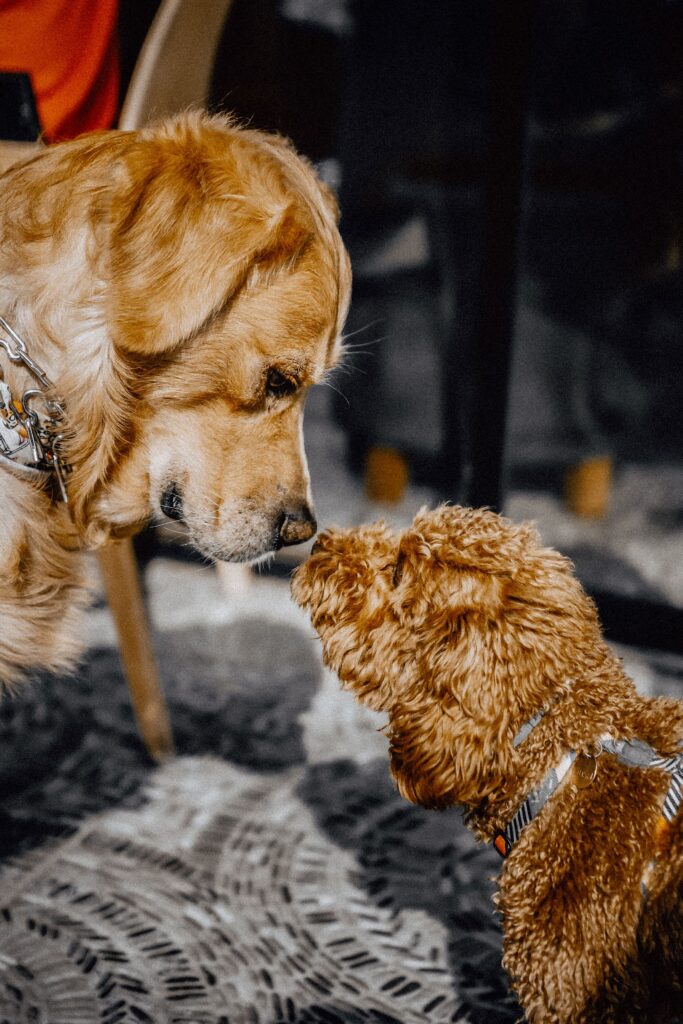
1. Dogs Experience the World Through Their Sense of Smell
While humans depend heavily on sight and sound to understand their surroundings, dogs rely much more on their noses.
A dog’s sense of smell is remarkably sophisticated. Their noses contain specialized scent receptors that help them detect and distinguish odors that people might not even notice.
Dogs use their sense of smell to investigate unfamiliar places, recognize familiar people and animals, follow scent trails, and gather information about their surroundings.
Scent also plays an important role in communication between dogs. Every dog carries a unique collection of odors influenced by factors such as their body chemistry, diet, and environment.
When dogs meet, sniffing allows them to investigate these scent signals before deciding how they want to interact.
2. Why Do Dogs Sniff Each Other’s Rear Ends?
This is probably the part of canine behavior that gets the most attention from dog owners!
Dogs often sniff each other’s rear ends because of the scent-producing anal sacs located on either side of the anus. These small sacs contain glands that release strong-smelling secretions.
To another dog, these odors provide chemical information that contributes to recognizing and investigating a canine companion.
In other words, what might seem like an unusual greeting to us is a natural way for dogs to learn more about one another.
Dogs may also investigate other areas of the body, including the face, ears, and coat. Different areas carry different odors, giving dogs additional information to explore.
It’s important to remember that scientists are still learning about exactly what dogs can determine from individual scent signals. We shouldn’t assume that a quick sniff tells a dog everything about another animal.
3. What Can Dogs Learn From Another Dog’s Scent?
A dog’s scent can communicate information that isn’t immediately obvious through appearance alone.
When one dog investigates another, it may be gathering clues about:
- Individual identity: Familiar scents can help dogs recognize animals they’ve encountered before.
- Sex and reproductive status: Certain chemical signals can provide information related to reproduction.
- Familiarity: Scent can help a dog distinguish between a familiar companion and an unfamiliar animal.
- Changes in condition: Dogs may notice differences in another animal’s scent that people cannot easily detect.
Dogs also investigate urine markings and scents left behind in the environment. These odors are another important part of canine communication.
Think of scent as one part of a dog’s social information system. Along with body language, facial expressions, and vocalizations, it helps dogs understand what’s happening around them.
4. Why Do Dogs Circle and Sniff Each Other?
You may have noticed that dogs rarely stand perfectly still during a greeting. Instead, they often move around each other, sniffing different areas before deciding what to do next.
This movement is a normal part of canine social investigation.
Approaching from the side or moving in a curved path can allow dogs to gather information without immediately confronting one another face-to-face.
Direct, forceful approaches can sometimes create unnecessary social pressure, particularly when one of the dogs is unfamiliar or uncomfortable.
Some greetings are brief, while others involve several seconds of sniffing and circling. The length of the interaction can vary depending on the individual dogs and the circumstances.
Not every greeting needs to lead to play or a friendship. Sometimes two dogs simply investigate each other and move along.
5. Why Do Some Dogs Sniff More Than Others?
Just like people, dogs have individual personalities and preferences.
Some dogs are naturally curious and seem interested in investigating every new dog they encounter. Others are more reserved and prefer to observe from a distance.
Several factors can influence how much a dog sniffs:
- Personality: Naturally curious dogs may spend more time investigating unfamiliar scents.
- Experience: Dogs with different social experiences may approach greetings in different ways.
- Excitement: An unfamiliar dog or an interesting environment can increase a dog’s interest in sniffing.
- Confidence: Some dogs are comfortable approaching new companions, while others need more time and space.
- Individual preference: Not every dog enjoys close physical interaction with unfamiliar dogs.
A dog who chooses not to participate in a greeting isn’t necessarily unfriendly or poorly socialized. Some dogs simply prefer a little personal space.
6. What Does It Mean When Dogs Sniff Each Other but Don’t Play?
This is something many dog owners wonder about.
Two dogs may spend several moments sniffing each other, exchange a little information, and then walk away without playing.
That’s completely normal!
Sniffing and playing are two different types of social behavior. A dog can be comfortable investigating another dog without wanting to engage in a game of chase or wrestling.
You might see dogs greet each other, briefly sniff, and then return to exploring their surroundings. Other dogs may show interest in playing immediately.
Pay attention to the overall interaction rather than assuming that every greeting should turn into playtime.
A successful interaction doesn’t have to be an exciting one. Sometimes calmly acknowledging another dog and moving on is exactly what both animals prefer.
7. How Can You Tell If a Dog Is Comfortable During a Greeting?
Sniffing is a normal canine behavior, but that doesn’t mean every dog enjoys being approached or investigated.
Understanding body language is important because dogs communicate their comfort level through much more than their noses.
Signs of a comfortable interaction may include:
- Loose, relaxed body movements.
- Soft facial expressions.
- Relaxed ears and natural body posture.
- Brief sniffing followed by the dogs moving away or changing activities.
- Curiosity without excessive fixation.
- The ability to disengage and move freely.
Signs that a dog may be uncomfortable include:
- A stiff or rigid body.
- Prolonged, intense staring.
- Repeatedly turning away or trying to leave.
- A tucked tail or tense facial expression.
- Growling, snapping, or showing teeth.
- One dog persistently following or crowding another dog that is trying to get away.
A wagging tail does not automatically mean a dog is happy. Tail position, movement, body tension, facial expression, and the overall situation should all be considered together.
If either dog appears uncomfortable, calmly create distance and allow them to settle. Never force dogs to continue interacting when one is trying to disengage.
8. How Should Owners Handle Dog-to-Dog Greetings?
Allowing dogs to investigate one another can be a positive part of social interaction, but introductions should always be handled with care.
Here are a few helpful guidelines:
Give dogs room to approach. Avoid forcing two unfamiliar dogs into a close, face-to-face greeting. Allow them to approach at a comfortable pace.
Watch their body language. Pay attention to both dogs throughout the interaction, not just the dog you know best.
Keep initial greetings brief. A short opportunity to sniff can be enough. If both dogs remain comfortable, they can have another opportunity to interact.
Allow dogs to walk away. If one dog loses interest or moves away, respect that choice. The other dog should not be allowed to repeatedly pursue an unwilling companion.
Avoid forcing friendships. Some dogs enjoy meeting new canine companions, while others are perfectly content with a smaller social circle.
For dogs who are nervous, reactive, or uncomfortable around unfamiliar animals, introductions should be approached especially carefully. A qualified, reward-based trainer or veterinary behavior professional can help determine the safest approach.
Remember, the goal isn’t to make every dog interact with every other dog. It’s to create positive experiences while respecting each dog’s individual comfort level.
Frequently Asked Questions
Why do dogs sniff each other’s private areas?
Dogs investigate the scent-producing glands around another dog’s rear end because these odors are part of canine chemical communication. It’s a natural way to gather information about an unfamiliar or familiar dog.
Why does my dog sniff another dog and then lick them?
Sniffing and licking can both occur during canine greetings. Licking may be a social behavior, an expression of interest, or part of an individual dog’s greeting style. Its meaning depends on the surrounding body language and situation.
Why does my dog sniff another dog repeatedly?
Some dogs are especially interested in investigating unfamiliar scents. However, repeated sniffing can become uncomfortable if the other dog is trying to move away. It’s important to allow both dogs opportunities to disengage.
Should I stop my dog from sniffing other dogs?
Not necessarily. Sniffing is a normal part of canine communication. However, owners should intervene when an interaction becomes too intense, one dog appears uncomfortable, or either animal cannot move away freely.
Do dogs recognize each other by smell?
Yes! Scent plays an important role in canine recognition. Dogs can use familiar odors to distinguish individuals and investigate animals they have encountered previously.
Final Thoughts
The next time you see two dogs greeting each other with a little sniffing and circling, remember that they’re doing much more than simply saying hello.
They’re using one of their most important senses to investigate, recognize, and communicate with the world around them.
What might seem like an unusual greeting to us is actually a fascinating part of being a dog!
Every dog has their own personality, social preferences, and comfort level. By understanding canine communication and respecting those differences, we can help create safer and more positive experiences for our four-legged companions.
Ultimately, understanding why dogs sniff each other gives us a better appreciation for the way they experience and communicate with the world around them. After all, sometimes a simple sniff can give a dog useful clues about whether they’d like to continue an interaction or simply go about their day.
Veterinary and Animal Behavior Sources
The following resources provide additional information about canine scent communication, normal social behavior, and dog body language:
- Merck Veterinary Manual – Normal Social Behavior in Dogs
- American Veterinary Society of Animal Behavior – Understanding Canine Facial Expressions and Body Postures
- University of Pennsylvania School of Veterinary Medicine – Dog Body Language Basics
- Wisconsin Humane Society – Dog-to-Dog Introductions
- American Chemical Society – Why Do Dogs Sniff Each Other’s Butts?
This article is intended for general educational purposes and is not a substitute for individualized veterinary or professional behavior advice.
Leave a Reply